


By Kathryn Peck
When you have four kids, you get very honest about toys.
You see what gets played with.You see what breaks. You see what gets dragged from room to room for years. And you see what ends up in the donation bin by February.
Over time, I’ve realized something: the toys I don’t regret buying — the ones that get passed down from child to child — aren’t the flashiest ones; they’re the ones that quietly earned a permanent place in our home.
You see what gets played with.You see what breaks. You see what gets dragged from room to room for years.
And here’s what they all have in common.
1. They Grow With My Kids
The toys I’ve never regretted are the ones that meant one thing at age 3 and something completely different at age 7.
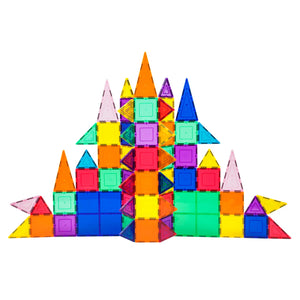
Wooden blocks started out as simple stackers, then became towers, castle walls, and lava traps. Simple dollhouses turned into veterinary clinics and schooling arenas for horse shows. And magnetic tiles started as square houses and evolved to mazes for hermit crabs and guinea pigs (I’m not kidding), marble runs, tunnels for trains.
When a toy can evolve, it earns its keep.
2. They Invite Imagination (Instead of Doing the Work)
I used to think more features meant more fun. Now I know better.
The toys that lasted in our house were the ones that didn’t light up, didn’t talk, and didn’t tell my kids exactly what to do. They required effort — the good kind. The kind that builds stories and problem-solving and sibling collaboration (and yes, occasional sibling arguments ...).
The more a toy leaves room for imagination, the more it gets used.
3. They Survived Real Life
As any mom of four will tell you, this full house is not a gentle environment. The toys I don’t regret are the ones that:
- Can be stepped on (and live to tell the tale)
- Can be tossed in a bin without breaking
- Can handle being loved hard
Quality materials matter. Solid wood. Thick board books. Well-made games with pieces that don’t feel flimsy. I don’t need everything to be heirloom-level precious — but I do need it to survive a rainy Saturday afternoon.
4. They Encouraged Independent Play
There is something sweet about the sound of children playing without your help. (Not all the time, but sometimes, yes.)
The toys I’m most grateful for are the ones that gave me space — to cook dinner, to answer emails, and to drink my coffee while it was still warm.
- Open-ended building sets.
- Art supplies that didn’t require constant instruction (or supervision for mess prevention).
- Games my older kids could set up on their own.
When a toy empowers a child instead of depending on an adult, it’s a gift for the whole family.
5. They Worked for Multiple Ages
One of the biggest lessons motherhood taught me is this: the best toys don’t live in strict age categories.
Some of our most-played-with items were loved by toddlers and elementary-aged kids at the same time — just in different ways.
When a toy bridges the gap between ages, it doesn’t just last longer. It brings siblings together.
And that’s priceless.
What I’ve Learned
After four kids and years in a toy store, here’s the truth:
Less, but better. Better design. Better materials. Better play value.
The toys that stay aren’t the flashy ones — they’re the ones that quietly become part of childhood.
That’s what I look for at home. And that’s what I look for at Bicycle Pie.
-
About the author: Kathryn is the owner of Bicycle Pie and mom of 4 little ones. Also a writer, editor, and former owner of one of Boston's premiere baby boutiques, she continues to write about motherhood, children's products, family life, and all other things that test our skills and patience as parents.
 Previous